What Causes Steam Turbine Seal Leakage? Causes, Wear Signs & Solutions
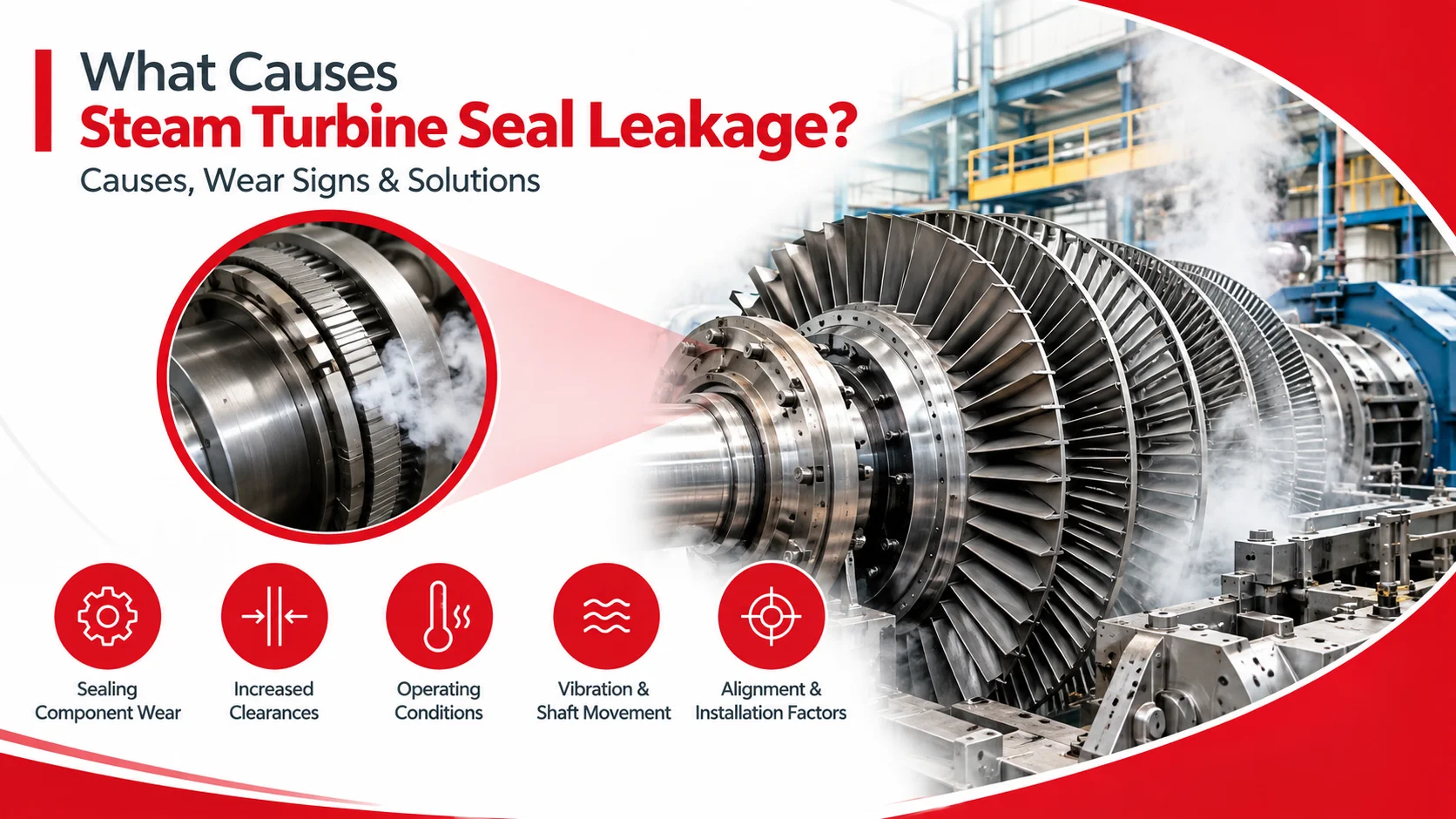
Steam turbine seal leakage can develop when sealing components wear, clearances increase, or operating conditions affect the sealing arrangement. Identifying the cause is important before replacing a turbine seal ring.
A proper inspection can help determine whether leakage is caused by the sealing ring itself or by factors such as shaft movement, vibration, alignment, thermal expansion, or installation conditions.
What Causes Steam Turbine Seal Leakage?
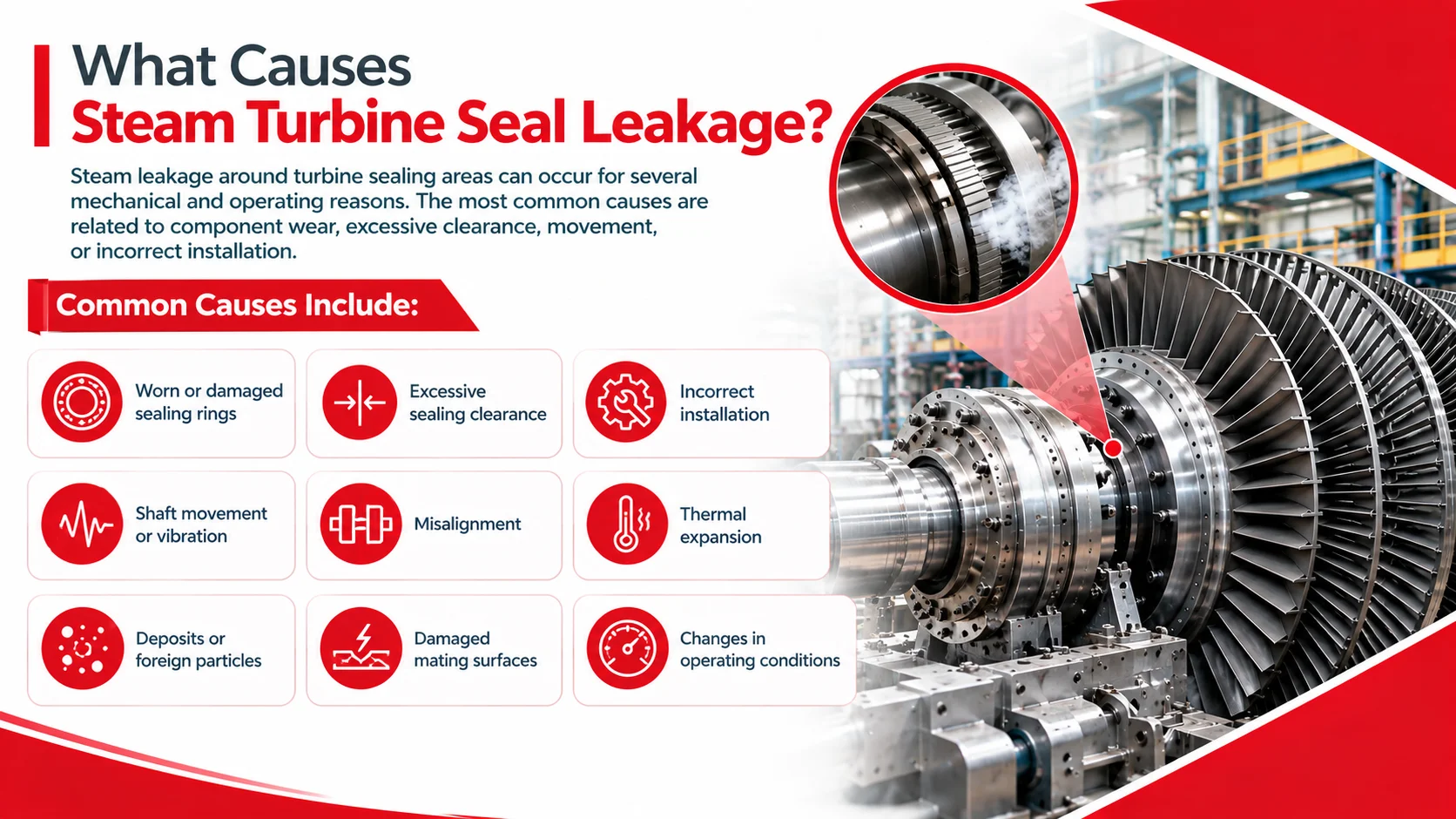
Steam leakage around turbine sealing areas can occur for several mechanical and operating reasons. The most common causes are related to component wear, excessive clearance, movement, or incorrect installation.
Common causes include:
- Worn or damaged sealing rings
- Excessive sealing clearance
- Incorrect installation
- Shaft movement or vibration
- Misalignment
- Thermal expansion
- Deposits or foreign particles
- Damaged mating surfaces
- Changes in operating conditions
Worn or Damaged Sealing Rings
Turbine sealing rings can gradually wear during continuous operation. Damage may also occur because of vibration, contamination, incorrect installation, or abnormal operating conditions.
During inspection, check the ring for uneven wear, cracks, scoring, deformation, or excessive material loss that could affect the sealing arrangement.
Excessive Sealing Clearance
The clearance between the sealing component and rotating shaft affects how effectively steam movement is controlled. Increased clearance can allow more steam to pass through the sealing area.
Excessive clearance may result from normal wear, shaft movement, thermal effects, incorrect installation, or deformation of the sealing components.
Incorrect Installation or Alignment
Incorrect positioning or alignment can create uneven clearance around the turbine sealing arrangement. This can cause localized contact and accelerate wear on the sealing ring.
If a replacement ring develops uneven wear shortly after installation, the installation condition and alignment should also be inspected.
Vibration and Shaft Movement
Excessive vibration can affect the relationship between the sealing ring and rotating shaft. Continuous movement may result in uneven wear or increased clearance.
If abnormal wear is found on only part of the ring, shaft movement, vibration, and alignment should be checked before installing another replacement ring.
Thermal Expansion
Steam turbines operate under elevated temperatures, causing components to expand and contract during operation. These dimensional changes can affect sealing clearances.
Repeated thermal cycling can therefore influence sealing performance, particularly when clearances are already close to their operating limits.
How Worn Turbine Seal Rings Affect Performance
A worn sealing ring may allow more steam to pass through the sealing area than intended. The impact depends on the turbine design, seal location, operating conditions, and severity of the leakage.
Potential effects include:
- Increased steam leakage
- Higher steam consumption
- Reduced sealing efficiency
- Changes in turbine performance
- Increased wear around the sealing area
- Additional maintenance requirements
Increased leakage does not necessarily mean the sealing ring is the only problem. The complete sealing arrangement should be inspected before deciding on replacement.
Signs That a Turbine Seal Ring May Need Replacement
A turbine sealing ring should be inspected when leakage increases or abnormal wear becomes visible. Measurements and inspection findings can help determine whether replacement is necessary.
Common signs include:
- Increasing steam leakage
- Excessive sealing clearance
- Uneven ring wear
- Cracking or deformation
- Grooves or scoring
- Visible material loss
- Abnormal wear patterns
Increasing Steam Leakage
An increase in steam leakage can indicate that the sealing arrangement is no longer maintaining the required clearance. However, leakage by itself does not confirm that the ring requires replacement.
Other possible causes, including shaft movement, alignment issues, and mating-surface damage, should also be considered during inspection.
Abnormal Wear During Inspection
Wear patterns can provide useful information about the condition of a turbine sealing arrangement. Uneven contact or localized damage may indicate a problem beyond normal component wear.
Inspect the ring for scoring, cracks, deformation, localized material loss, and other changes that could affect sealing performance.
Increased Clearance
Increased clearance can reduce the effectiveness of the sealing arrangement and allow additional steam to pass through. Clearance should therefore be measured during inspection.
The measured value should be compared with the applicable turbine or equipment requirements before deciding whether replacement is necessary.
What Should Be Checked Before Replacing Turbine Seal Rings?
Replacing a worn ring without identifying the cause of failure can result in repeated leakage or premature wear. The surrounding components and operating conditions should also be examined.
Before replacement, inspect:
- Existing ring condition
- Wear pattern
- Sealing clearance
- Shaft condition
- Mating surfaces
- Alignment
- Vibration
- Operating temperature
- Operating pressure
- Installation condition
5-Step Turbine Seal Inspection
- 1. Inspect the existing ring: Check for cracks, scoring, deformation, uneven wear, and visible material loss.
- 2. Measure the sealing clearance: Measure the existing clearance and compare it with the applicable equipment requirements.
- 3. Check the shaft and mating surfaces: Look for scoring, deposits, surface damage, abnormal wear, or other conditions affecting the sealing arrangement.
- 4. Review operating conditions: Check operating temperature, pressure, speed, vibration, and other relevant turbine conditions.
- 5. Identify the cause before replacement: Determine whether the problem is related to the ring, clearance, installation, alignment, vibration, or another operating condition.
How Operating Conditions Affect Turbine Seal Ring Life
The operating environment can influence both the service life and sealing performance of turbine components. Temperature, pressure, speed, vibration, and mechanical movement can all affect the sealing arrangement.
Important factors include:
- Operating temperature
- Steam pressure
- Differential pressure
- Shaft speed
- Vibration
- Thermal cycling
- Alignment
- Mechanical movement
Temperature and Thermal Cycling
Repeated heating and cooling can cause dimensional changes in turbine components. These changes can affect the clearance between stationary sealing components and the rotating shaft.
The sealing arrangement should therefore be considered according to the turbine's actual operating conditions rather than only its stationary dimensions.
Steam Pressure and Differential Pressure
Pressure differences across the sealing arrangement influence steam movement through available clearances. Changes in operating pressure can therefore affect leakage behaviour.
When investigating leakage, operating pressure should be considered together with clearance, ring condition, and the turbine's sealing configuration.
Shaft Speed and Vibration
High-speed turbine operation requires the sealing arrangement to maintain suitable clearances around the rotating shaft. Excessive vibration can interfere with this relationship.
Abnormal vibration can contribute to uneven wear, increased clearance, and premature damage to sealing components.
Carbon Segment Rings for Steam Turbine Sealing
Carbon segment rings are used in certain turbine sealing arrangements to control unwanted steam movement around rotating components. Their segmented construction allows the sealing assembly to surround the shaft.
The required ring design depends on the turbine configuration, dimensions, operating conditions, segment arrangement, and required clearances.
Important considerations include:
- Turbine design
- Ring dimensions
- Segment configuration
- Shaft dimensions
- Operating conditions
- Required clearances
- Material requirements
- Installation arrangement
For replacement requirements, carbon segment rings for turbine machines can be manufactured according to the required component dimensions and application specifications.
How to Choose Replacement Carbon Segment Rings for a Turbine
Selecting a replacement ring requires accurate information about the existing turbine sealing arrangement. Matching only the general product type may not be sufficient for a proper replacement.
Before placing an enquiry, provide the following information where available:
- Turbine or machine model
- Existing ring dimensions
- Shaft dimensions
- Number of segments
- Operating temperature
- Operating pressure
- Operating speed
- Required sealing clearance
- Existing component drawing
- Material or specification requirements
Providing accurate component information helps the manufacturer understand the application and determine the required replacement configuration.
Carbon Segment Ring Replacement Checklist
Before ordering replacement turbine carbon segment rings, confirm the available technical and application information. Drawings and details from the existing component can be particularly useful.
- Turbine or machine details
- Ring dimensions
- Shaft dimensions
- Segment configuration
- Operating temperature
- Operating pressure
- Operating speed
- Required clearance
- Existing drawings
- Material requirements
If some information is unavailable, existing components, photographs, drawings, or previous supply details may help establish the required specifications.
Frequently Asked Questions
Common causes include worn sealing rings, excessive clearance, vibration, shaft movement, misalignment, thermal expansion, contamination, and installation issues.
Increasing leakage, excessive clearance, uneven wear, scoring, cracking, deformation, or visible material loss can indicate that the sealing ring requires inspection.
Yes. Wear can increase the sealing clearance and reduce the effectiveness of the sealing arrangement, potentially allowing more steam to pass through the sealing area.
Replacement depends on the ring's condition, measured clearance, wear pattern, turbine requirements, and maintenance criteria. Inspection should determine whether replacement is required.
Turbine model, ring dimensions, shaft dimensions, segment configuration, operating conditions, required clearance, and available drawings can help specify a replacement ring.
Conclusion
Steam turbine seal leakage can result from component wear, excessive clearance, vibration, thermal movement, alignment problems, contamination, or installation conditions.
Before replacing a sealing ring, inspect the complete sealing arrangement and identify the underlying cause. This can help prevent premature wear and repeated leakage.
For replacement requirements, JM Graphite manufactures carbon segment rings for turbine machine applications based on required dimensions and application specifications.