Why Are Carbon Brushes Sparking in an Electric Motor? Causes & Solutions
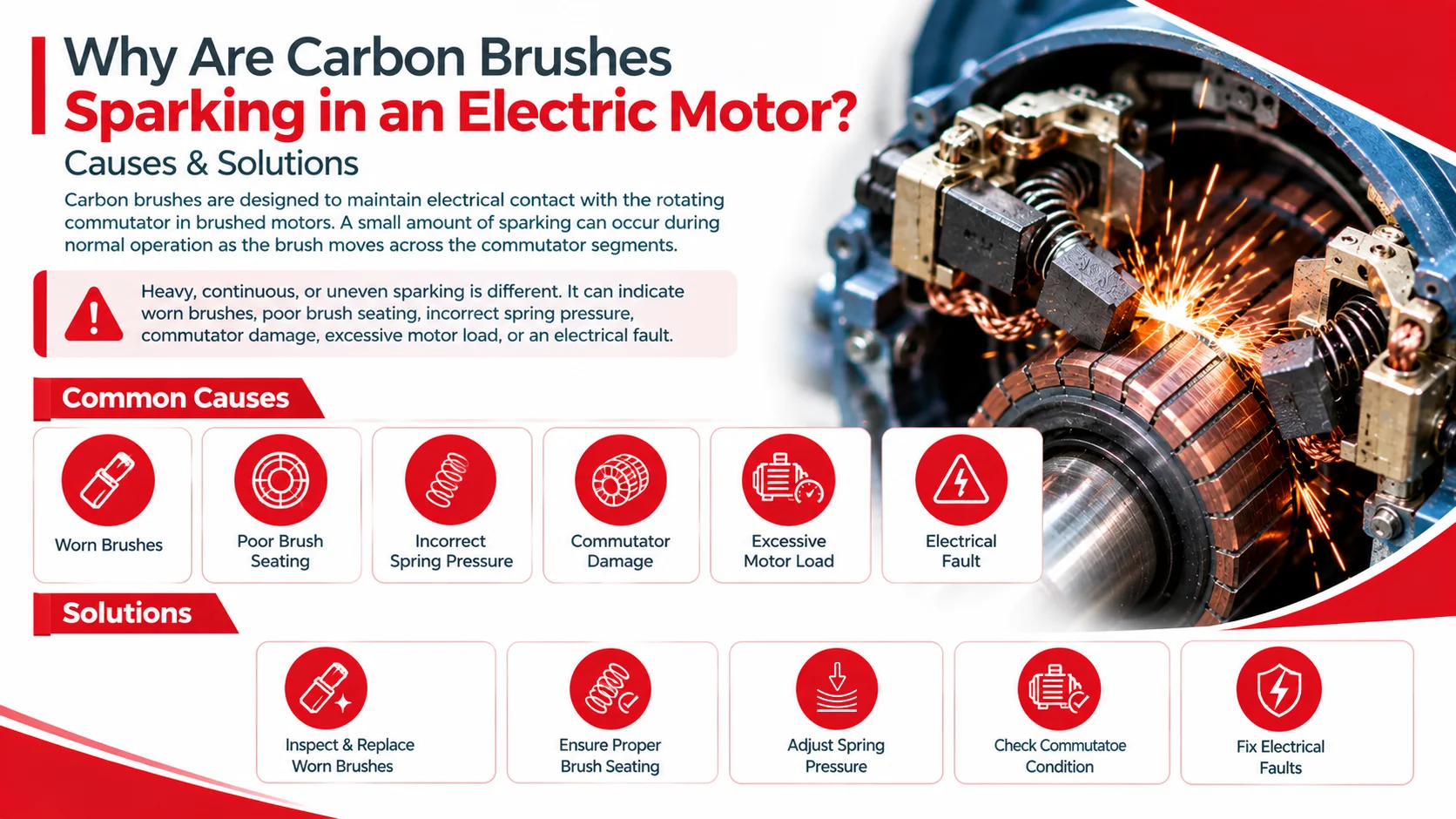
Carbon brushes are designed to maintain electrical contact with the rotating commutator in brushed motors. A small amount of sparking can occur during normal operation as the brush moves across the commutator segments.
Heavy, continuous, or uneven sparking is different. It can indicate worn brushes, poor brush seating, incorrect spring pressure, commutator damage, excessive motor load, or an electrical fault.
Why Do Carbon Brushes Spark in Electric Motors?
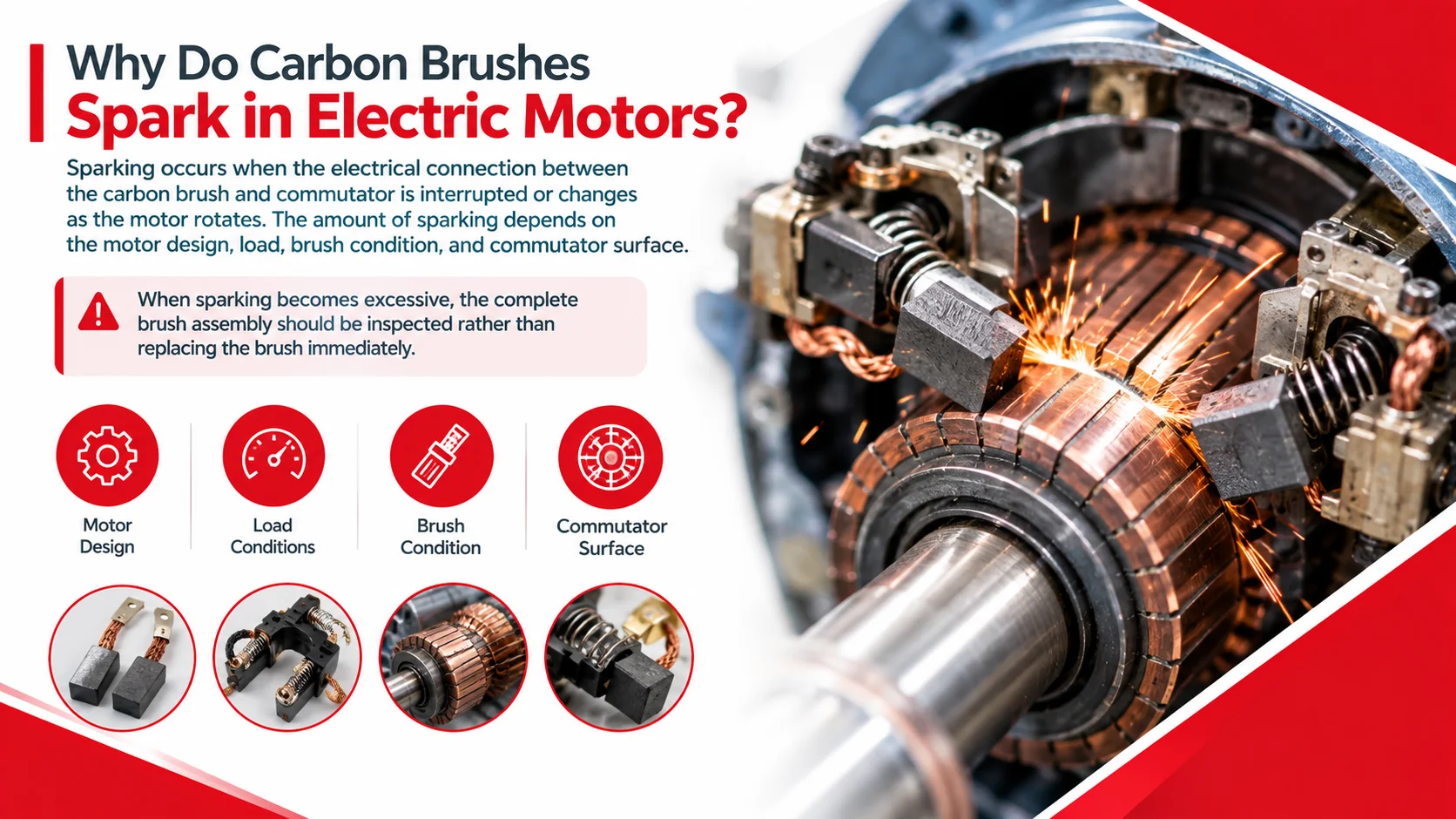
Sparking occurs when the electrical connection between the carbon brush and commutator is interrupted or changes as the motor rotates. The amount of sparking depends on the motor design, load, brush condition, and commutator surface.
When sparking becomes excessive, the complete brush assembly should be inspected rather than replacing the brush immediately.
Normal Sparking vs Excessive Sparking
Minor sparking can occur during normal operation of some brushed motors, particularly during changes in speed or load. It does not always indicate a defective carbon brush.
Excessive sparking is usually more noticeable and may be accompanied by heat, burning marks, carbon dust, or reduced motor performance.
Signs of abnormal sparking include:
- Large or continuous sparks
- Sparks concentrated around one brush
- Brush overheating
- Burning smell
- Excessive carbon dust
- Commutator discoloration
- Reduced motor performance
- Rapid brush wear
Causes of Excessive Sparking
Worn Carbon Brushes
Carbon brushes gradually wear because they remain in contact with the rotating commutator. As the brush becomes shorter or its contact surface deteriorates, electrical contact can become less stable.
Uneven wear can also indicate problems with brush alignment, spring pressure, brush holder movement, or the commutator surface.
Inspect the brush for:
- Excessive wear
- Uneven contact surface
- Cracks or chips
- Burn marks
- Incorrect dimensions
- Loose or damaged terminals
Poor Brush Contact and Pressure
The brush must maintain consistent contact with the commutator while being able to move correctly inside the holder. Poor seating or incorrect spring pressure can disturb this contact.
A brush that is incorrectly aligned, restricted inside the holder, or not properly matched to the commutator may produce excessive sparking.
What Causes Excessive Sparking After Replacing Carbon Brushes?
Installing new brushes does not always eliminate motor sparking. If the commutator, brush holder, spring, motor load, or electrical system has an underlying problem, the new brushes can also spark.
This is why the brush and the components around it should be inspected together after replacement.
New Brushes Not Properly Seated
New brushes may initially have a smaller contact area against an existing commutator surface. Poor contact can create localized current transfer and increased sparking.
The brush should be correctly positioned and seated according to the motor manufacturer's maintenance requirements. Incorrect seating can also cause uneven wear.
Damaged or Dirty Commutator
The commutator provides the rotating contact surface for the carbon brushes. Carbon deposits, grooves, burning, uneven surfaces, or other damage can interfere with electrical contact.
If the commutator is in poor condition, installing another set of brushes may not solve the sparking problem. The commutator condition should be checked during inspection.
Motor Overload or Electrical Problems
Excessive mechanical load can increase the current drawn by the motor and place additional stress on the brush and commutator assembly.
Persistent sparking can also be associated with armature or other electrical problems. If brush and commutator conditions appear satisfactory, the motor should be investigated further.
Signs Your Electric Motor Carbon Brushes Need Inspection
Sparking is only one indication that the brush assembly may require attention. Changes in motor performance, brush wear, and visible damage can also indicate that inspection is necessary.
Common warning signs include:
- Excessive or uneven sparking
- Shortened carbon brushes
- Uneven brush wear
- Reduced motor performance
- Intermittent motor operation
- Brush overheating
- Burning smell
- Excessive carbon dust
- Commutator discoloration
- Visible brush or holder damage
These symptoms can have more than one cause. Inspecting the brush, holder, commutator, and operating conditions together provides a better basis for identifying the problem.
How to Troubleshoot Sparking Carbon Brushes
A step-by-step inspection can help determine whether the carbon brush is causing the sparking or whether another motor component is involved.
1. Safely Isolate the Motor
Before inspection or maintenance, ensure the motor is switched off and safely isolated according to the applicable maintenance procedure. Check the brush assembly only after the equipment is in a safe condition for inspection.
2. Check Carbon Brush Condition
Inspect the brush length, contact surface, edges, and overall condition. Compare the wear pattern between brushes where multiple brushes are installed.
Look for: Excessive wear, uneven wear, cracks, chipping, burning, or loose terminals.
3. Inspect the Brush Holder and Springs
The brush should move correctly within its holder without excessive restriction. The holder should also maintain the brush in the correct position. Check for damaged holders, restricted brush movement, incorrect alignment, or spring conditions that may affect contact pressure.
4. Check Brush Seating
A replacement brush should make appropriate contact with the commutator surface. Poor seating can create a small contact area and increase localized sparking. This should receive particular attention when excessive sparking begins immediately after installing new brushes.
5. Inspect the Commutator
Examine the commutator for carbon buildup, grooves, burning, uneven wear, or other surface damage. An abnormal commutator surface can cause continued sparking even when the carbon brushes themselves are new.
6. Check Motor Load and Operating Conditions
Consider whether the motor is operating under a higher load than intended. Excessive load can increase current and affect brush and commutator performance. Also consider operating speed, duty cycle, temperature, and other conditions relevant to the motor.
7. Investigate Persistent Sparking
If heavy sparking continues after the brushes and commutator have been checked, the problem may be related to another electrical or mechanical component. Further inspection may be required rather than repeatedly replacing the carbon brushes.
Choosing the Right Carbon Brushes for Electric Motors
Replacement carbon brushes should be selected according to the motor, brush assembly, electrical requirements, and operating conditions. Matching only the physical dimensions may not provide the required performance.
The following information can help when specifying replacement brushes:
- Motor make and model
- Existing brush dimensions
- Carbon brush grade
- Brush holder type
- Terminal configuration
- Motor application
- Operating conditions
- Existing drawing or specification
- Original brush details or sample
Why Brush Grade and Dimensions Matter
Carbon brush grades are selected for particular electrical and mechanical operating conditions. The brush material can affect contact behaviour, wear, commutator interaction, and service life.
Dimensions are equally important because the brush must fit correctly within the holder and maintain the required contact with the commutator.
When Should Carbon Brushes Be Replaced?
Replacement depends on the brush's wear condition, applicable wear limit, motor performance, and equipment maintenance requirements. A brush showing excessive wear, damage, overheating, or abnormal contact should be inspected before continued operation.
Carbon Brushes for Electrical Motors
Carbon brushes are used in brushed electric motors to transfer electrical current between the stationary brush assembly and rotating commutator.
For replacement applications, the brush can be specified according to the required dimensions, grade, terminal arrangement, motor type, and operating conditions.
JM Graphite manufactures carbon brushes for electrical motor applications based on required component and application specifications.
Information to Provide for Carbon Brush Replacement
Providing complete component information helps determine the required brush configuration and specification.
- Motor make and model
- Existing brush dimensions
- Brush grade or specification
- Drawing or technical details
- Terminal arrangement
- Required quantity
- Motor application
- Operating conditions
An existing brush, technical drawing, or component sample can also help when the original specification is unavailable.
Carbon Brush Sparking: Quick Inspection Checklist
Before replacing carbon brushes because of sparking, inspect the complete brush and commutator assembly.
- Check brush length and wear
- Inspect the brush contact surface
- Check brush seating and alignment
- Inspect holder movement
- Check spring condition
- Examine the commutator
- Remove or assess carbon buildup
- Check for commutator damage
- Consider motor load
- Investigate persistent electrical issues
If the sparking continues after correcting an obvious brush-related issue, avoid assuming that the replacement brush is defective. The commutator, armature, brush holder, motor load, and electrical condition may also need to be examined.